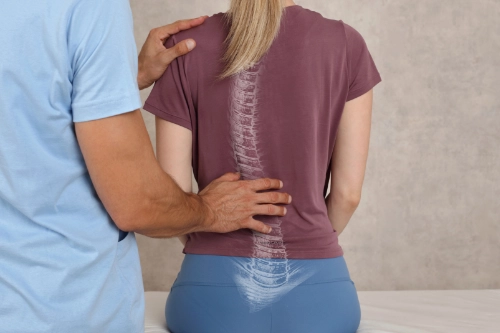
 Maybe a school screening flagged your child’s uneven shoulders. Maybe you’re in your fifties and your doctor mentioned the word “scoliosis” after reviewing an X-ray for back pain. Either way, hearing that your spine curves sideways can be unsettling, and it usually leads to a lot of questions. Will it get worse? Do I need a brace? Is surgery the only real fix? For many people, chiropractic care offers a conservative, drug-free way to manage scoliosis-related pain, stiffness, and posture changes while keeping a close eye on how the curve behaves over time. In this article, we’ll walk through what scoliosis is, why it happens, what symptoms to watch for, and how a chiropractor can fit into a smart, well-rounded scoliosis treatment plan.
What Is Scoliosis?
Scoliosis is a sideways curvature of the spine. When you look at a healthy spine from behind, it should run fairly straight from the base of the skull down to the pelvis. With scoliosis, the spine bends to one side, often forming a “C” or “S” shape. The vertebrae also tend to rotate as the curve develops, which is why one side of the ribcage or lower back can look more prominent than the other.
Doctors measure scoliosis using the Cobb angle, which is calculated from a standing X-ray. A curve of 10 degrees or more is considered scoliosis. In general terms, curves under about 25 degrees are considered mild, curves between roughly 25 and 40 degrees are moderate, and curves beyond 40 to 50 degrees are considered severe.
The Main Types of Scoliosis
Adolescent idiopathic scoliosis is the most common form. “Idiopathic” simply means there’s no single identifiable cause. It typically shows up between ages 10 and 18, during growth spurts, and it’s more likely to progress in girls.
Adult degenerative scoliosis (sometimes called de novo scoliosis) develops later in life as the discs and facet joints of the lower back wear unevenly. It’s closely tied to degenerative disc disease and spinal arthritis, and it’s surprisingly common in people over 60.
Congenital scoliosis results from vertebrae that formed abnormally before birth.
Neuromuscular scoliosis develops as a result of conditions that affect muscle control, such as cerebral palsy or muscular dystrophy.
There’s also functional scoliosis, which isn’t a structural problem with the spine at all. It’s a curve caused by something else, like a leg length difference, muscle spasm, or pelvic imbalance. Functional curves often improve once the underlying cause is addressed, which is one reason a thorough evaluation matters so much.
What Causes Scoliosis?
The honest answer is that most cases of adolescent scoliosis don’t have a clear cause. Research points to a mix of genetic and developmental factors, and scoliosis does tend to run in families. It is not caused by carrying a heavy backpack, sleeping in the wrong position, or poor posture, though those things can certainly make an existing curve feel worse.
Adult scoliosis is a different story. It usually develops from:
Asymmetrical disc degeneration. When the discs on one side of the lumbar spine thin out faster than the other, the spine gradually tilts toward the collapsed side.
Facet joint arthritis. Uneven wear in the small joints at the back of the spine can allow vertebrae to shift and rotate.
Weakened bone. Osteoporosis and compression fractures can contribute to spinal deformity as we age.
A progressing childhood curve. Some adults had mild scoliosis as teenagers that never caused trouble until degeneration sped up later in life.
Common Signs and Symptoms of Scoliosis
Mild scoliosis in children is often painless, which is why it’s frequently discovered during a school screening, a sports physical, or when a parent notices something “off” about their child’s posture. Visual signs include:
Uneven shoulders or one shoulder blade that sticks out more than the other. A waistline that looks higher on one side. The body leaning to one side. One hip sitting higher than the other. A rib hump that becomes visible when bending forward (this is what the Adam’s forward bend test looks for). Clothing that hangs unevenly.
In adults, pain is usually the reason people seek help. Adult scoliosis symptoms often include:
Low back pain and stiffness that worsens with standing or walking and eases when sitting or leaning forward.
Muscle fatigue and spasms along one side of the spine as muscles work overtime to hold the body upright.
Leg pain, numbness, or tingling when the curve narrows the spaces where nerves exit the spine. This can overlap with spinal stenosis and sciatica.
Loss of height or a feeling of leaning forward or sideways as the day goes on.
If you notice rapidly worsening curvature, significant weakness in the legs, trouble with bladder or bowel control, or shortness of breath, see a medical provider right away. Those signs call for urgent evaluation.
How Chiropractic Care Helps Scoliosis
Let’s be upfront about something, because you deserve straight answers. Chiropractic care is not a proven way to “straighten” a structural scoliosis curve, and any provider who promises to erase a curve should make you cautious. What a chiropractor can do is help reduce pain, improve spinal mobility, strengthen the muscles that support your spine, and monitor your curve so changes are caught early. For many patients, that’s exactly what makes daily life more comfortable.
A Thorough Scoliosis Evaluation
Care starts with a detailed history and physical exam, including posture analysis, range of motion testing, neurological screening, and the Adam’s forward bend test. Your chiropractor may take or review standing X-rays to measure the Cobb angle and identify the curve pattern. This evaluation also helps separate structural scoliosis from functional scoliosis caused by muscle imbalance or pelvic tilt.
Gentle Spinal Adjustments
Spinal manipulation can restore movement to stiff, restricted segments above, below, and within the curve. For adults with degenerative scoliosis, this often translates into less stiffness and better tolerance for standing and walking. Chiropractors frequently use lower-force techniques for scoliosis patients, especially older adults with arthritis or bone density concerns, such as instrument-assisted adjustments or drop-table techniques.
Flexion-Distraction Therapy
Flexion-distraction is a gentle, rhythmic technique performed on a specialized table that gently stretches and decompresses the lower spine. It’s especially useful for adult scoliosis patients who also deal with disc degeneration, stenosis, or nerve-related leg pain.
Soft Tissue Therapy
With scoliosis, the muscles on the concave side of the curve tend to tighten and shorten while muscles on the convex side get overstretched and fatigued. Myofascial release, trigger point therapy, and instrument-assisted soft tissue mobilization (IASTM) help reduce spasm and relieve the muscle tension that drives so much scoliosis back pain.
Scoliosis-Specific Exercises
This is where some of the most meaningful progress happens. Physiotherapeutic scoliosis-specific exercises, such as approaches based on the Schroth method, focus on corrective breathing, postural awareness, and strengthening in a way that’s tailored to your specific curve pattern. Your chiropractor may teach these directly or coordinate with a therapist trained in these methods. Core stabilization and hip strengthening round out the program.
Posture, Ergonomics, and Lifestyle Coaching
Small daily habits add up. Your chiropractor can help you set up your workstation, choose supportive sleep positions, address leg length differences with heel lifts when appropriate, and build activity into your routine in ways that protect your spine.
Ongoing Curve Monitoring
For growing children and teens, regular monitoring is essential. Curves can progress quickly during growth spurts, and catching that early gives families more options. A good chiropractor works as part of the care team, referring to an orthopedic specialist when a curve reaches the range where bracing or surgical consultation should be considered.
Chiropractic Care vs. Bracing and Spinal Fusion Surgery
Conventional scoliosis treatment generally follows three paths: observation, bracing, and surgery.
Bracing is typically recommended for children and teens who are still growing and have moderate curves, often in the 25 to 40 degree range. A brace doesn’t correct the curve, but research shows it can reduce the chance that a curve progresses to the point of needing surgery. Bracing requires wearing the device for many hours a day, which can be physically and emotionally challenging for kids.
Spinal fusion surgery is usually reserved for severe curves, often beyond 45 to 50 degrees, or curves that continue progressing. Surgeons use rods and screws to straighten and fuse part of the spine. It can be effective, but it’s a major operation with a long recovery, a permanent loss of motion in the fused segments, and risks like infection, hardware problems, and added stress on the segments above and below the fusion.
Chiropractic care isn’t a replacement for bracing or surgery when those are truly needed. Instead, it fills an important gap. For the large number of people with mild to moderate curves, and for adults whose main complaint is pain rather than progression, conservative care can relieve symptoms and improve quality of life without injections, long-term pain medication, or an operating room. It also works well alongside bracing and after surgical recovery as part of a broader rehab plan.
What to Expect From Chiropractic Treatment for Scoliosis
Your first visit will focus on understanding your curve and how it’s affecting your body. From there, your chiropractor will build a plan that fits your age, curve severity, symptoms, and goals.
Many adults with scoliosis back pain notice improvements in stiffness and comfort within the first few weeks of care. Muscle spasms often calm down quickly once soft tissue work and adjustments begin. Building strength and postural control takes longer, usually several months of consistent exercise, but that’s the work that creates lasting results.
For kids and teens, the goal is usually monitoring, exercise, and comfort during the growth years, with coordination alongside a pediatrician or orthopedist. Scoliosis is typically a long-term condition, so many patients shift from a more intensive phase of care into periodic maintenance visits and a home exercise routine that keeps them moving well.
Get Help for Scoliosis Pain Today
Whether you’re a parent worried about your child’s posture or an adult tired of back pain that keeps you from standing, walking, or enjoying your favorite activities, you don’t have to figure this out alone. Our team will take the time to evaluate your spine, explain what we find in plain language, and build a conservative plan designed around your needs. If your curve ever calls for specialist care, we’ll help you get there. Call our office today to schedule your scoliosis evaluation and take the first step toward a stronger, more comfortable spine.
Frequently Asked Questions About Scoliosis and Chiropractic Care
Can a chiropractor fix scoliosis?
A chiropractor cannot reliably reverse a structural scoliosis curve. However, chiropractic care can reduce scoliosis-related back pain, improve spinal mobility, relieve muscle tension, and teach corrective exercises that support better posture. Functional scoliosis caused by muscle imbalance or pelvic tilt may improve significantly once the underlying cause is treated.
Is chiropractic care safe for people with scoliosis?
Chiropractic care is generally safe for people with scoliosis when it’s delivered by a licensed chiropractor after a thorough evaluation. Chiropractors often use gentle, low-force techniques for scoliosis patients, particularly older adults with arthritis or osteoporosis. Anyone with severe or rapidly progressing curves should also be monitored by an orthopedic specialist.
What is the Schroth method for scoliosis?
The Schroth method is a scoliosis-specific exercise approach that uses corrective breathing, postural alignment, and targeted strengthening customized to an individual’s curve pattern. It aims to improve posture, reduce pain, and help slow progression. Chiropractors and physical therapists may teach Schroth-based exercises as part of conservative scoliosis treatment.
Can scoliosis develop in adults?
Yes. Adult degenerative scoliosis develops later in life when the discs and facet joints of the lower back wear down unevenly, causing the spine to tilt and rotate. It’s common in people over 60 and often causes low back pain, stiffness, and leg symptoms similar to spinal stenosis.
What degree of scoliosis requires surgery?
Spinal fusion surgery is typically considered for curves greater than 45 to 50 degrees, or for curves that continue to progress despite other treatment. Mild curves under 25 degrees are usually managed with monitoring, exercise, and conservative care, while moderate curves in growing children may be treated with bracing.
Does scoliosis get worse with age?
Scoliosis can progress in adulthood, especially larger curves and curves associated with disc degeneration. Mild curves often remain stable for many years. Regular monitoring, strengthening exercises, and staying active can help manage symptoms and support spinal function as you age.
How do I know if my child has scoliosis?
Common signs of scoliosis in children include uneven shoulders, one shoulder blade sticking out, an uneven waistline, one hip higher than the other, and a rib hump that appears when bending forward. If you notice any of these signs, schedule a spinal evaluation so the curve can be measured and monitored during growth.